
Learning Center

Educational articles, comparison guides, and practical resources to help make informed life insurance decisions.
Latest Learning Center Articles
Learning Center Articles













Educational articles, comparison guides, and practical resources to help make informed life insurance decisions.
Permanent life insurance comes in several forms. Learn how Whole Life, Participating Whole Life, Fixed Universal Life, IUL, VUL, and Final Expense differ — and which client priorities each design may fit.
Whole Life Insurance inspires strong opinions. Learn which criticisms are justified, why lifetime guarantees cost more, how poor design causes disappointment, and what questions to ask before buying
Participating whole life is more than a product label. Learn how contractual guarantees, dividends, paid-up additions, riders and funding choices can work together inside a highly customizable permanent life insurance policy.
Life insurance can do more than provide a death benefit. Learn how death-benefit protection, living benefits, and financial flexibility can work together to help protect you and your family throughout life.
Long-term care can place significant pressure on personal savings and retirement assets. Learn how Long-Term Care Partnership Programs in Washington, Oregon, and Idaho can combine qualifying private long-term care insurance with dollar-for-dollar Medicaid asset protection—helping families plan not only for the cost of care, but for what they hope to preserve.
There is no single long-term care strategy that is right for everyone. Some families will rely heavily on personal assets. Some will purchase standalone long-term care insurance. Others may use life insurance or annuity-based solutions that include qualifying long-term care benefits. Many plans will combine several resources.
There is no single price for long-term care. The cost depends on where care is delivered, how much help is needed, how long it is needed, and where the person lives. But current national figures make one point very clear: even a partial need for paid care can become a major household expense.
Long-term care often begins quietly and affects the entire family. Part 1 of our Long-Term Care Planning Series explains why the conversation should start before a care event forces the decision.
Buying life insurance online can be fast and convenient, but it is not the only way to buy coverage. Learn how online purchasing, direct company agents and independent agents differ — and when each approach may make sense.
Financial underwriting helps an insurance company determine whether the amount of life insurance requested is reasonable for the financial need. Learn what carriers consider, including income, existing coverage, household obligations, and stay-at-home spouses or partners.
We insure our homes, vehicles, and other valuable assets—often because we are required to. But what about the person whose income pays for all of them? Learn why protecting your Human Life Value deserves a place in your financial planning, especially during your 30s and 40s.
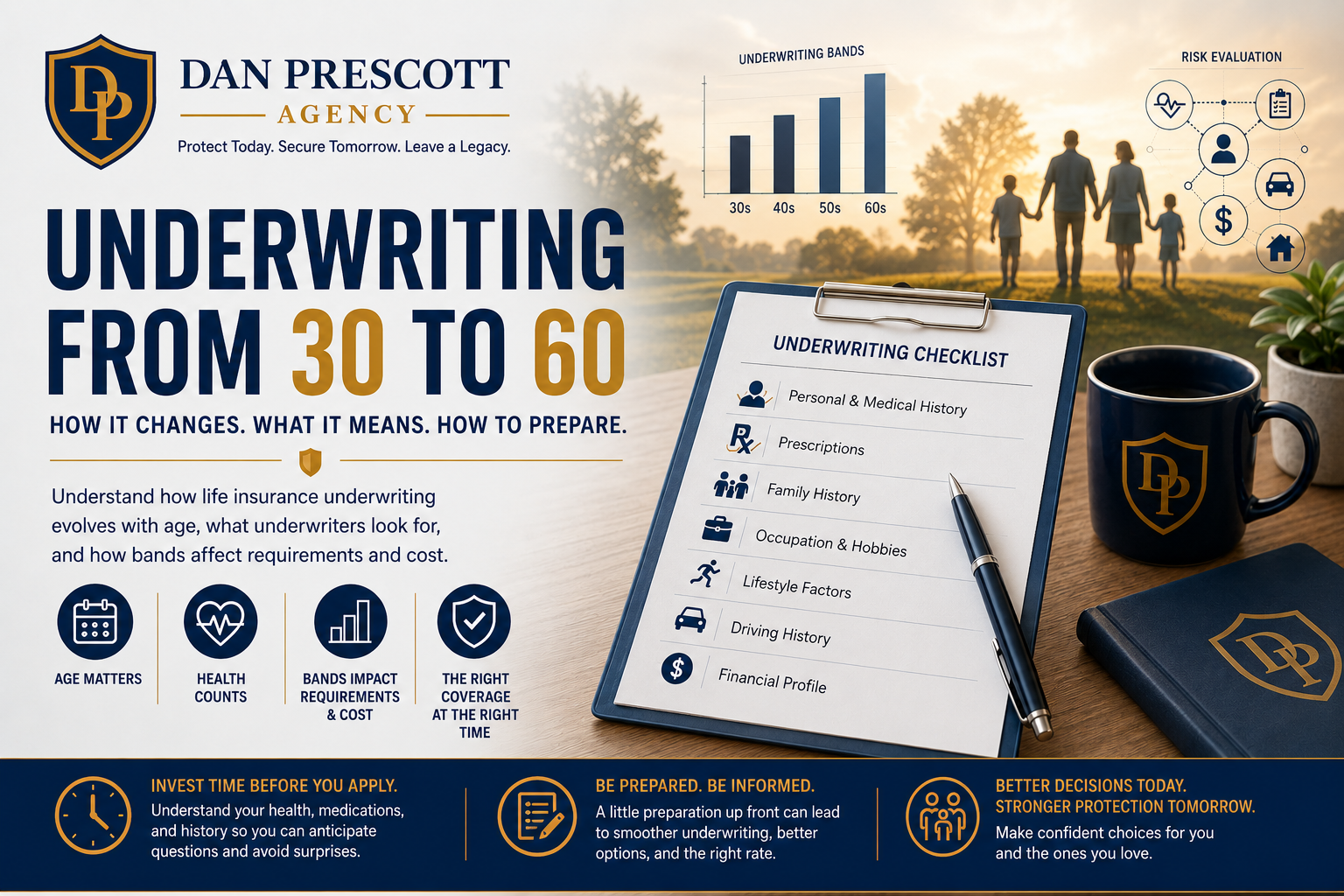
Underwriting today may be traditional, accelerated, or simplified. Some qualifying applicants can complete an accelerated process without a traditional medical exam, using application information and approved external data. Others may still need medical records, an exam, or laboratory testing. The process varies by insurer, product, coverage amount, and applicant.
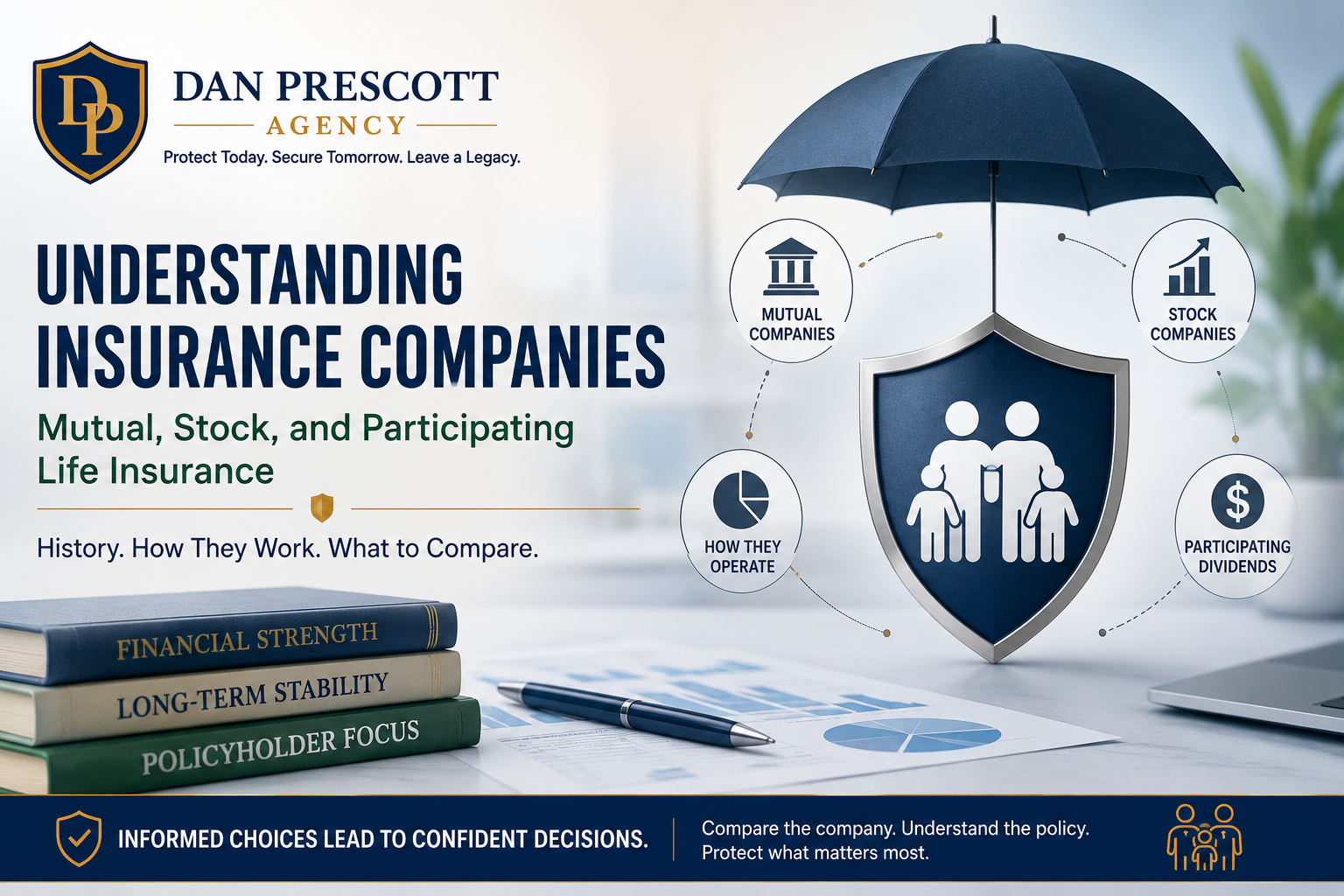
Life insurance can represent a financial promise that lasts for decades. Understanding how insurance companies operate, who owns them, and how they manage their financial obligations can help you make a more informed decision—especially when considering permanent life insurance.
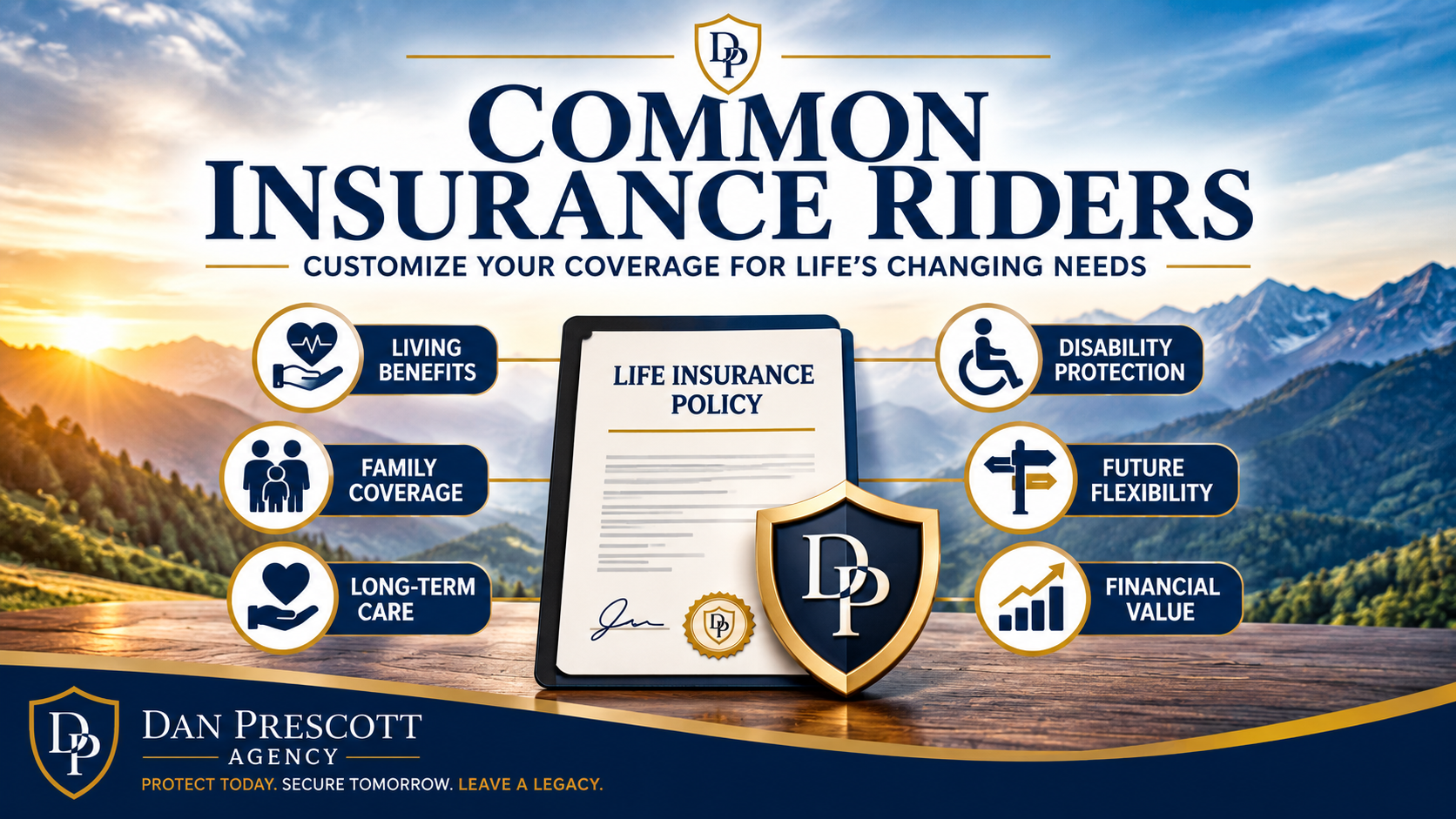
Life insurance riders can add valuable protection, flexibility, and living benefits to a policy. This guide explains common riders, including today’s increasingly important chronic-illness and accelerated-benefit options, family riders, and features that may help coverage adapt as life changes.
Choosing the right life insurance doesn't have to be confusing. This educational guide explains the differences between term and permanent life insurance, key policy features, and the factors to consider when selecting coverage that helps protect your family's financial future.
Human Life Value is a financial planning concept that estimates the economic value of your future lifetime earnings and contributions to your family. Your Human Life Value includes far more than your paycheck. It represents everything your family relies on financially, including…
Most retirement plans focus on 401(k)s, IRAs, pensions, and Social Security—but they aren't the only options. Participating whole life insurance can complement traditional retirement savings by offering financial flexibility, tax diversification, and lifelong protection as part of a well-rounded retirement strategy.