
Buying Life Insurance Online, Direct, or Through an Independent Agent
Life insurance has become easier to buy. Consumers can research coverage, receive quotes, complete applications, and, in some cases, receive an underwriting decision entirely online.
That convenience raises a fair question: If you can buy life insurance online, why work with an insurance professional at all?
There is no single answer that is right for everyone. Buying online, working with a company agent, and working with an independent agent can all be appropriate. The better question is whether you understand what you need, what you may qualify for, and what should be compared before you apply.
Three Ways to Buy Life Insurance
Online or digital purchasing emphasizes speed and convenience. A company or direct agent provides personal guidance within the products offered by that company. An independent agent may be able to compare products and underwriting approaches from multiple insurers.
None of these approaches is automatically better. They offer different levels of convenience, choice, comparison and guidance.
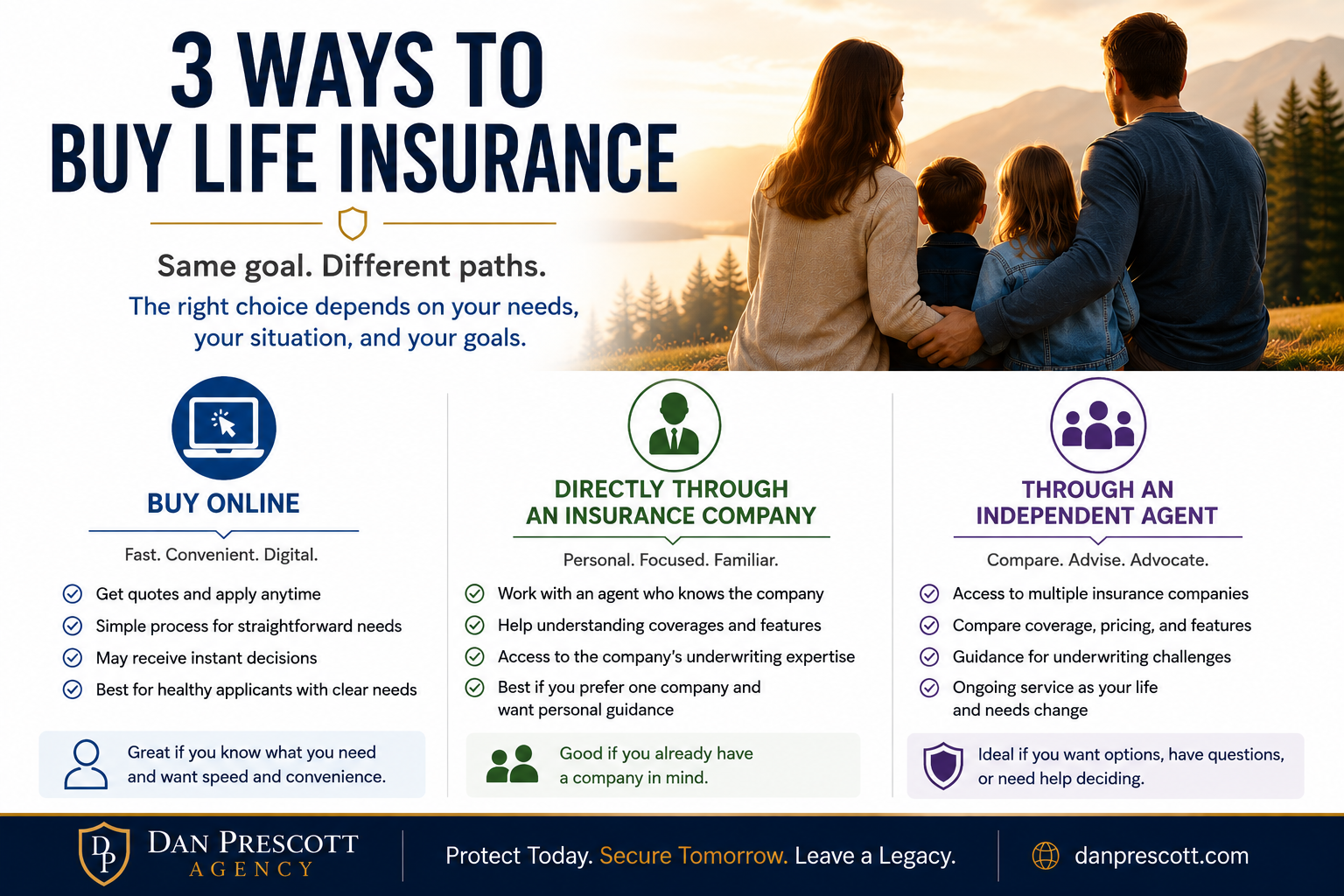
3 Way To Buy Life Insurance
When Buying Online Can Make Sense
Online purchasing can work very well when the need is straightforward. A healthy applicant who already knows the amount and length of term coverage needed may value a fast application, simple quoting and a rapid underwriting decision.
The important point is not that buying online is a poor choice. The risk is buying before understanding the need.
The Decisions That Come Before the Application
Before applying, consider a few questions:
How much coverage do you actually need? How long should the coverage last? Should some protection be temporary and some permanent? Which policy features or riders matter? What happens if your health changes? And which insurance company may view your health, financial and lifestyle profile most favorably?
The lowest advertised premium does not necessarily answer those questions.

Before You Apply
Underwriting Can Change the Conversation
Life insurance pricing is based on more than age and coverage amount. Depending on the insurer and product, underwriting may consider health history, prescriptions, tobacco use, family history, occupation, driving history, finances, hobbies and other factors.
Different insurers can evaluate the same risk differently. A person with sleep apnea, treated hypertension, elevated cholesterol or another underwriting concern may not receive the same offer from every company.
This creates an important distinction: shopping for a quote and shopping for the right underwriting fit are not always the same thing.
An independent agent may be able to review the situation before an application is submitted, compare possible carrier approaches, and help determine where the case may fit best.
Term and Permanent Insurance Are Different Decisions
Term insurance provides protection for a defined period and is generally easier to compare. Permanent insurance is designed for a much longer commitment and may involve cash value, guarantees, premium structure, riders, policy loans and long-term death-benefit objectives.
Permanent insurance is available through some online channels, but the ability to purchase it online does not remove the need to understand how the policy is designed to work over time.
The longer the commitment, the more important it becomes to understand the policy before purchasing it.
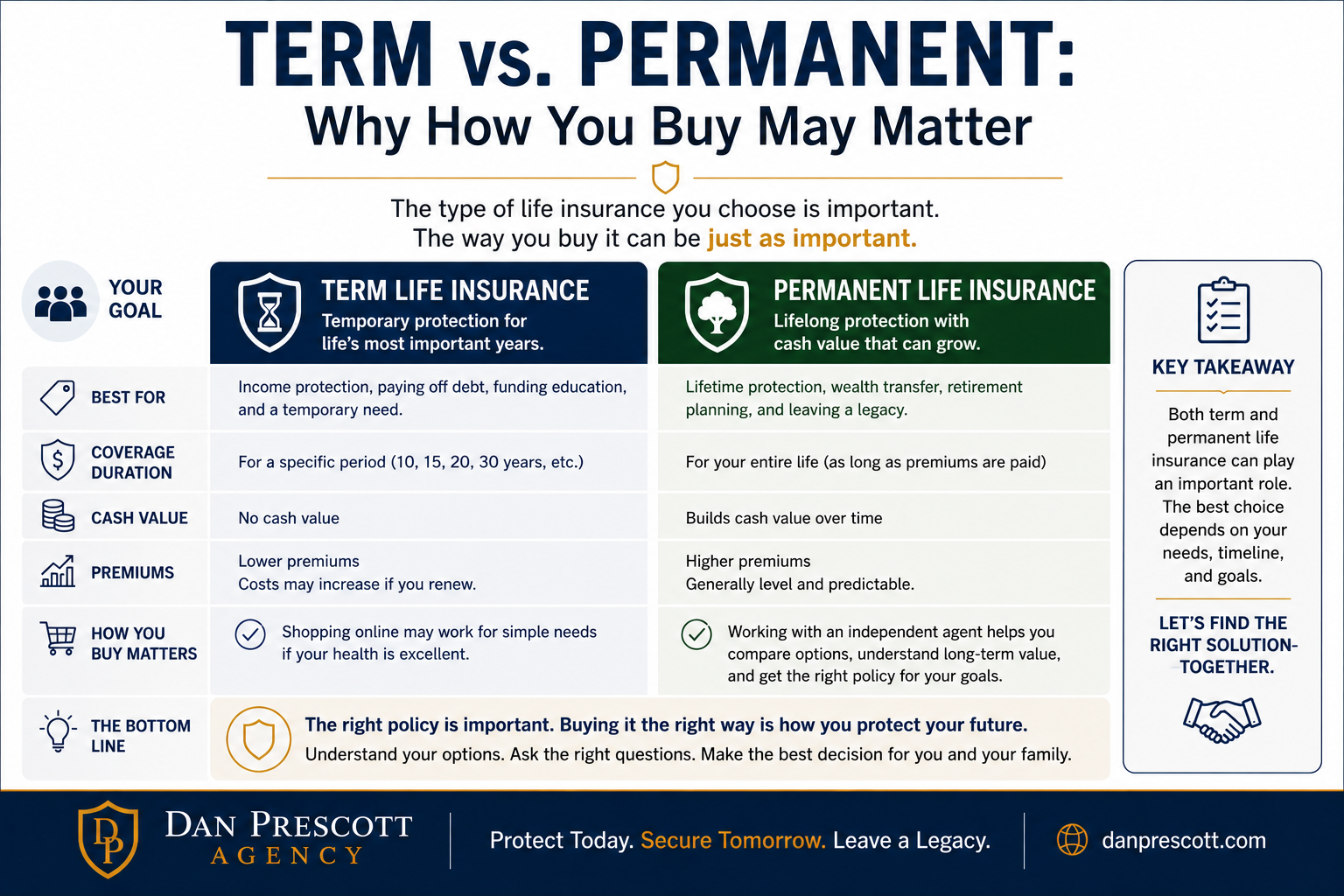
Term vs Permanent
What About Term Insurance That Never Pays a Death Claim?
Term insurance is temporary protection. Some policyholders die during the coverage period and a death benefit is paid. Others survive the term, and some policies lapse or are discontinued before the original coverage period ends.
That does not mean the insurance failed. If a family carried substantial protection during the years when children were young, a mortgage was large and household income needed protection, the policy performed its purpose even if no death occurred.
Permanent insurance serves a different purpose. A permanent policy that is properly maintained and remains in force is designed to continue beyond a limited term and provide benefits according to the policy's provisions.
Where an Independent Agent May Add Value
An independent agent does not make the underwriting decision; the insurance company does. The agent's value is in helping prepare for that decision.
That can include determining the amount and type of coverage, comparing insurers, identifying underwriting concerns before an application is submitted, explaining tradeoffs among policies, and helping review coverage as life circumstances change.
A direct company agent can also provide valuable guidance and deep knowledge of that company's products. The main difference is the scope of comparison available before the purchase.
So, Should You Buy Life Insurance Online?
Maybe. If you are healthy, understand your insurance need, know the amount and duration of coverage you want, and are comfortable evaluating policy features, an online solution may be appropriate.
If you have already selected an insurance company, working directly with that company's agent may make sense.
If you are uncertain how much coverage you need, have underwriting concerns, want to compare companies, or are considering a long-term permanent policy, an independent agent may provide additional value.
Education First. Application Second.
Life insurance is easier to purchase than ever. That is a positive development. But making a product easier to buy does not necessarily make the decision simpler.
Before you apply, understand how much protection you need, how long you need it, what type of insurance fits the need, what underwriting issues may affect your options, and which company and policy may be appropriate.
Then decide how you want to buy it.
The important decision is not whether you buy life insurance online or through an agent. It is whether you understand what you are buying — and why — before you apply.
Disclaimer: This material is for general educational purposes only. Life insurance products, underwriting requirements, policy features, riders, availability and costs vary by insurance company and individual circumstances. Review the actual policy, insurer disclosures and applicable illustrations before purchasing coverage.