
Long-Term Care Partnership Programs in Washington, Oregon, and Idaho
What Happens When Your Own Resources Aren’t Enough?
Most long-term care planning begins with the question: How will I pay for care if I need it?
But there is another question that deserves just as much attention: What happens if the cost of care eventually exceeds what I am prepared to pay from my own resources?
For some people, Medicaid eventually becomes an important source of long-term care assistance. But Medicaid is means-tested. Financial eligibility requirements apply in addition to requirements related to the need for care.
That does not mean everyone must “spend everything.” Certain resources may not be counted, spouses can have important protections, and individual circumstances matter.
But without special protection, significant personal resources may have to be used before Medicaid long-term care assistance becomes available.
That is where Long-Term Care Partnership programs become important.
What Happens When You Need Extended Care?
A person needing extended care may initially pay through some combination of insurance benefits, income, savings, investments and other available resources.
If care continues for years, those resources can decline substantially.
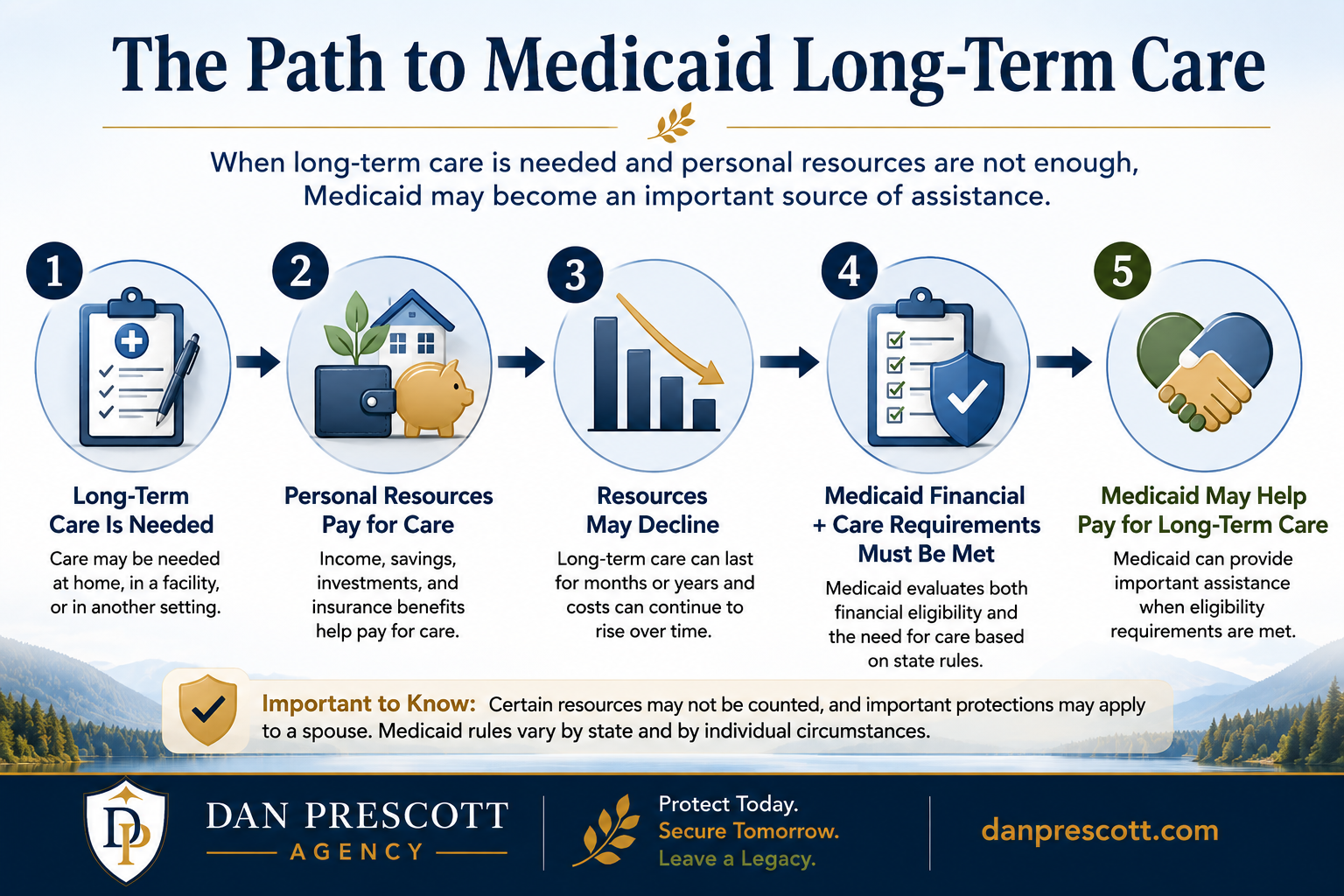
The Path To Medicaid Long-Term Care
The Partnership Difference
A Long-Term Care Partnership policy is a qualifying private long-term care insurance policy that provides something ordinary non-Partnership coverage does not: Medicaid asset protection.
Generally, every dollar of qualifying benefits paid by the Partnership policy can allow a corresponding dollar of assets to be disregarded when Medicaid long-term-care financial eligibility is later determined.
Washington, Oregon and Idaho all use this basic dollar-for-dollar approach.
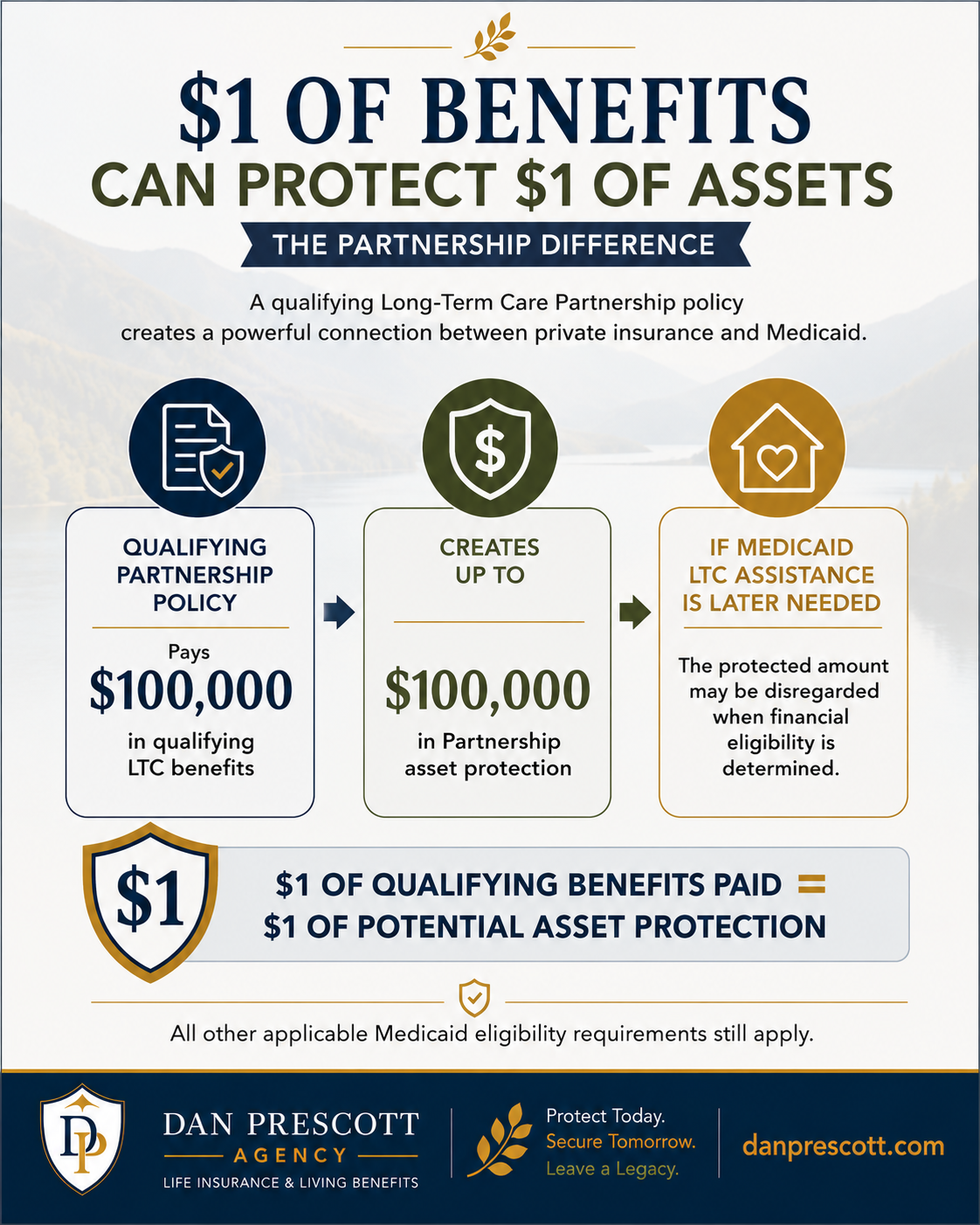
A Simple Example
Suppose a qualifying Partnership policy pays $100,000 for someone’s long-term care.
If that person later needs Medicaid assistance, up to $100,000 of assets may receive Partnership protection, in addition to resources otherwise permitted under Medicaid rules.
The policy does not automatically qualify the person for Medicaid.
It changes how a corresponding amount of assets is treated.
Why Estate Recovery Matters Too
Partnership protection can continue to matter after Medicaid eligibility is established.
Federal and state Medicaid rules can permit recovery of certain Medicaid costs from a recipient’s estate after death, subject to important limitations, exceptions and protections.
Qualifying Partnership asset protection can reduce the assets subject to that recovery.
Key takeaway: It isn’t only about helping pay for care. It may also help protect assets you hope to preserve.
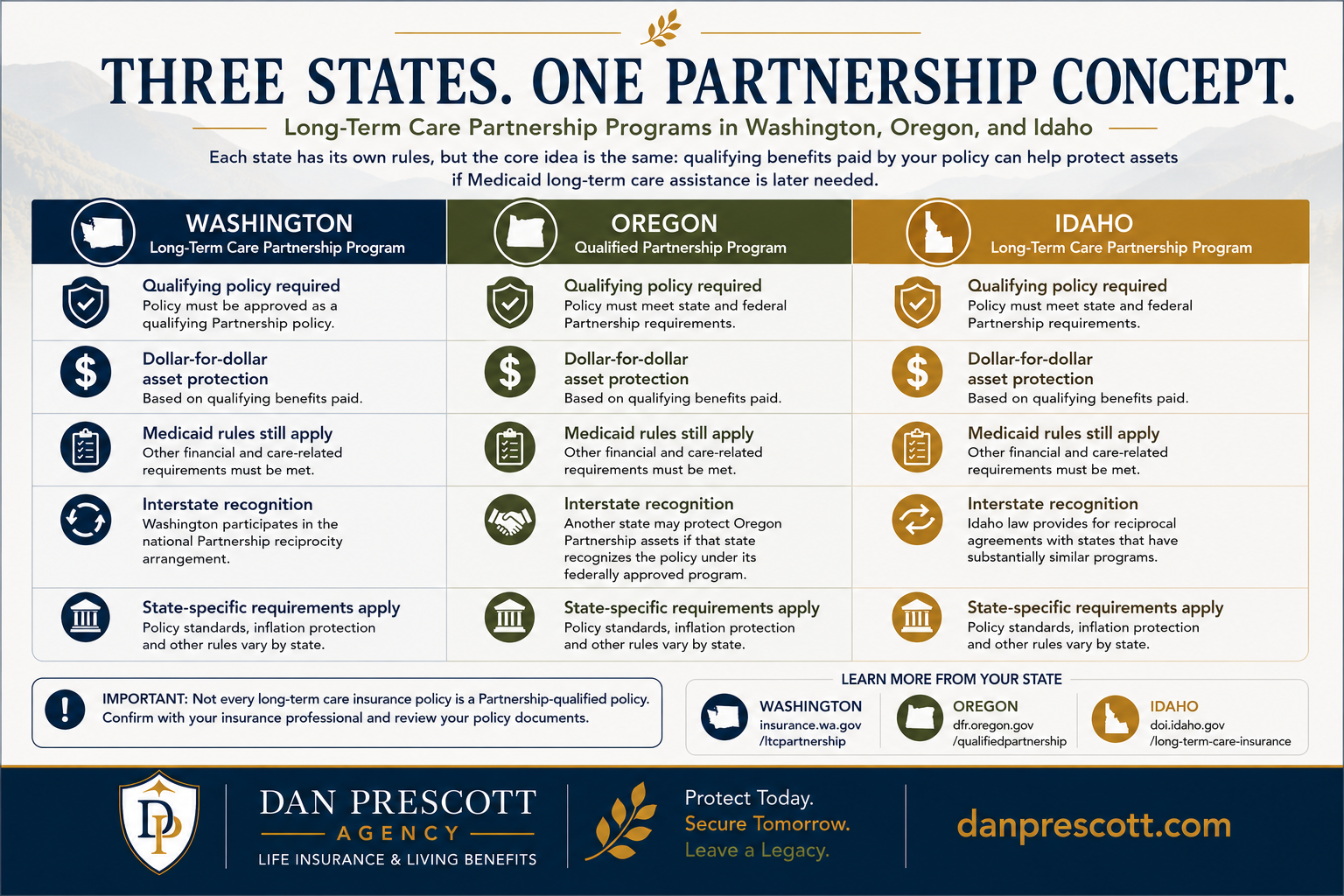
Washington, Oregon, Idaho LTC Pretnership Programs
Washington State Long-Term Care Partnership Program
Oregon Qualified Partnership Program
Idaho Long-Term Care Insurance / Partnership Program
What If You Move?
Partnership asset protection may be recognized when someone moves between participating states, but the rules of the state where Medicaid is ultimately requested matter.
Washington explicitly participates in the national Partnership reciprocity agreement. Oregon explains that another state may protect Oregon Partnership assets only if that state recognizes the policy under its federally approved Partnership program.
Washington Residents: Don’t Confuse Two Different Programs
WA Cares - Washington Long-Term Care Partnership Program
WA Cares is Washington’s public long-term-care insurance program.
The Washington Long-Term Care Partnership Program involves qualifying private LTC insurance and special Medicaid asset-protection rules.
They serve different purposes and should not be treated as interchangeable.
Three Questions Worth Asking
Is this policy Partnership-qualified in my state?
If I use the policy, how could the benefits affect the assets I may be able to protect?
What happens to that Partnership protection if I later move to another state?
Those questions can reveal an important difference between LTC policies that may otherwise appear similar.
What do you want to protect?
Income and savings
Retirement assets
A spouse’s financial security
Assets you hope to leave your family
Long-term care planning is ultimately about deciding how much risk you are comfortable retaining—and how much you want to transfer. For some families, Partnership protection adds another consideration to that decision.
Have Questions About Long-Term Care Partnership Planning?
Understanding the difference between ordinary long-term care coverage and Partnership-qualified coverage can be important when protecting retirement assets, a spouse or a future legacy is part of your planning goal.
Educational Disclaimer: This material is for general educational purposes and is not legal, tax, Medicaid, financial, or insurance advice or a determination of Medicaid eligibility. Medicaid eligibility, resource treatment, spousal protections, estate recovery, reciprocity, and Long-Term Care Partnership requirements vary by state, individual circumstances, and policy and may change. Consult the appropriate state agency and qualified professionals regarding your individual situation.