
LISTEN TO THIS ARTICLE · Approx. 5 minutes
Audio narration of the written article generated with an automated voice.
Most people insure their cars, homes, and other valuable possessions without giving it a second thought. Yet many overlook protecting the asset that makes all of those things possible—their ability to earn an income and provide for the people they love.
For many families, life insurance is viewed as just another monthly expense. But when chosen carefully, it can be much more than that.
The right policy can help protect your family's financial security and, depending on the type of coverage, may also provide cash value and financial flexibility during your lifetime.
Understanding Your Human Life Value
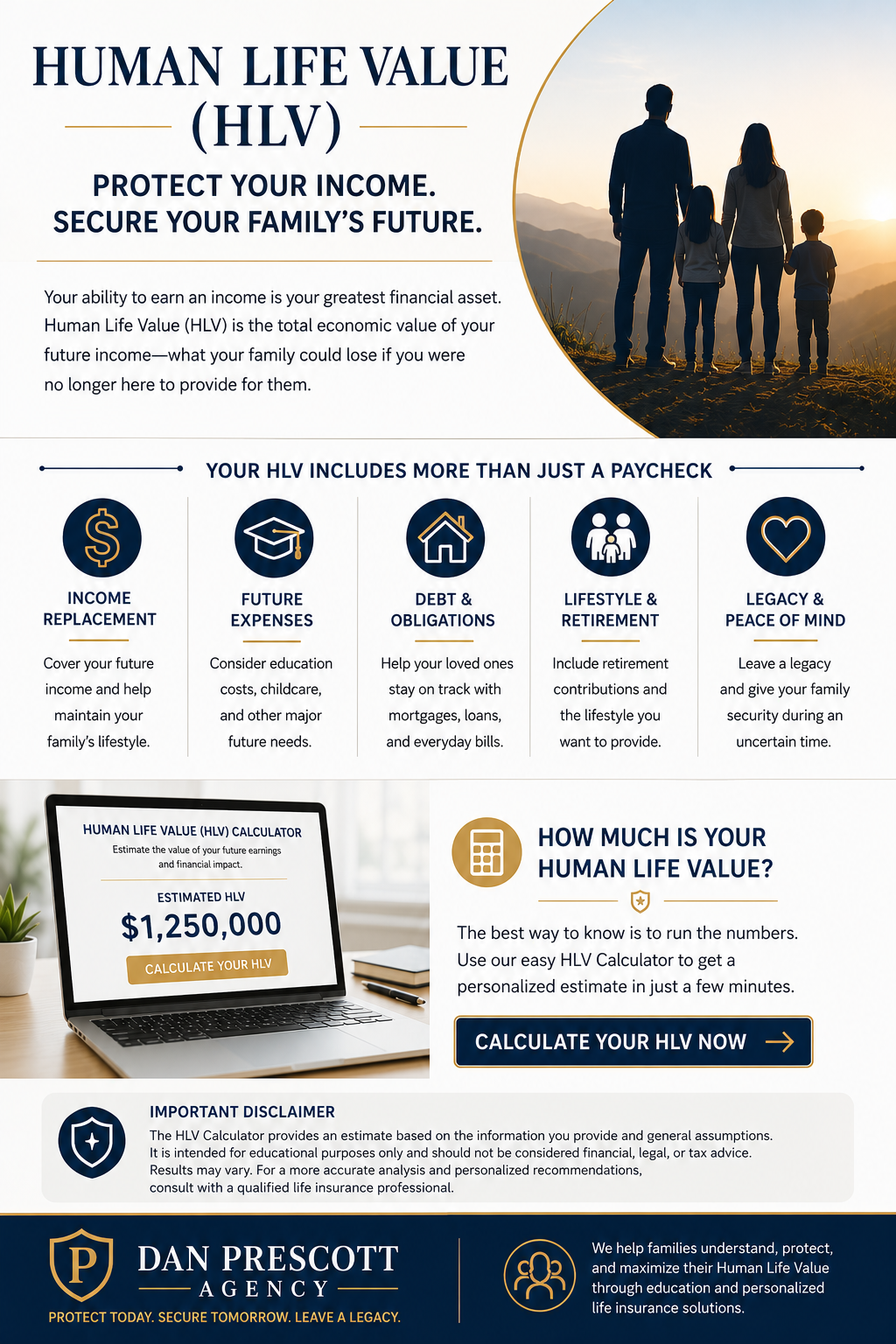
Financial professionals often use the term Human Life Value (HLV) to describe the economic value of a person's future earning potential. Simply put, it's an estimate of the income, benefits, and financial support your family could lose if you were no longer there to provide it.
Understanding your Human Life Value can help determine how much life insurance your family may actually need—not just today, but for years to come.
Human Life Value is an educational planning estimate—not a precise prescription for how much insurance someone should buy. Actual coverage needs depend on each family's resources, obligations, goals, and budget.
Life Insurance: More Than a Death Benefit
Life insurance is often associated with providing financial support after someone's death. While that remains its primary purpose, some types of life insurance offer additional benefits while you're living.
There are two primary categories of life insurance:
Term Life Insurance
Term life insurance provides coverage for a specific period, such as 10, 20, or 30 years. It is generally the most affordable option and is often well-suited for protecting a family's income during mortgage years, while raising children, or paying off major debts.
Permanent Life Insurance
Permanent life insurance includes several types of coverage designed for long-term protection. Participating whole life insurance, for example, generally provides contractual guarantees for premiums, cash value, and death benefit when policy requirements are met. It may also be eligible for non-guaranteed dividends.
Depending on the policy and the insurance company, cash value may:
Grow on a tax-deferred basis
Accumulate according to guaranteed values stated in the policy and, in participating policies, may also receive dividends, which are not guaranteed.
Be accessed through policy loans or withdrawals. Loans accrue interest, may reduce available cash value and the death benefit, and can create tax consequences in some circumstances.
Provide financial flexibility for emergencies, supplemental retirement cash flow, education expenses, or other needs
Because of these features, many people view permanent life insurance as more than just protection—it can become part of a broader long-term financial strategy.
A Different Way to Think About Insurance
It's common to spend hundreds or even thousands of dollars each year protecting our homes and vehicles. Yet the income that pays for those possessions is often left underinsured.
If your paycheck stopped tomorrow because of an unexpected death, would your family be able to maintain their lifestyle, pay the mortgage, fund future education, or save for retirement?
Protecting your earning power is one of the most important financial decisions you can make.
Building a Well-Rounded Strategy
For some families, the decision does not have to be term or permanent coverage. A combination of the two may provide different layers of protection for different stages of life.
A combination strategy may provide:
Affordable, higher levels of coverage during your peak earning years through term insurance.
Lifelong protection through permanent whole life insurance.
Cash value that can provide financial flexibility later in life.
Greater confidence that loved ones will be financially protected regardless of when death occurs.
Every family's needs are different, so the right balance depends on your age, financial goals, income, and responsibilities.
Where to Start
One of the best first steps is to calculate your Human Life Value. Doing so provides a clearer picture of the financial impact your loss could have on those who depend on you.
From there, you can work with a qualified insurance professional to determine whether term insurance, permanent life insurance, or a combination of both aligns with your long-term financial goals.
Life insurance isn't simply about preparing for the unexpected. It's about protecting your family's future, preserving your financial legacy, and ensuring that the people who matter most have the resources they need—no matter what life brings.
Educational Disclaimer: This article is for general educational purposes only and is not individualized insurance, legal, tax or financial advice. Policy guarantees, riders, dividend treatment, underwriting, availability and costs vary by insurer, policy form and state. Guarantees are subject to the claims-paying ability of the issuing insurance company. Dividends are not guaranteed. Consult the actual policy and illustration and appropriate professional advisers before making a decision.
Sources & References
National Association of Insurance Commissioners (NAIC) — Life Insurance Illustrations
https://content.naic.org/insurance-topics/life-insurance-illustrationsWashington State Office of the Insurance Commissioner — Types of Cash Value Life Insurance
https://www.insurance.wa.gov/insurance-resources/life-insurance/types-cash-value-life-insuranceWashington State Office of the Insurance Commissioner — Learn How Life Insurance Works
https://www.insurance.wa.gov/insurance-resources/life-insurance/learn-how-life-insurance-worksInternal Revenue Service — IRC §7702A / Modified Endowment Contract and seven-pay guidance
https://www.irs.gov/irb/2006-46_IRB