

EDUCATIONAL ARTICLE
Understanding Your Life Insurance Options
Learn the key differences between Term and Permanent life insurance so you can make the best decision for your family and future.
8 min read Category: Life Insurance Basics
Life Insurance Is More Than a Death Benefit
Life Insurance Is More Than a Death Benefit
Life insurance is often thought of as something that only benefits loved ones after you're gone. While that remains its primary purpose, today's life insurance can also play an important role in protecting your income, supporting long-term financial goals, and creating lasting financial security.
Depending on the type of policy you choose, life insurance may provide lifetime protection, tax-advantaged cash value growth, living benefits under qualifying conditions, retirement flexibility, and legacy planning opportunities. Understanding your options is the first step toward choosing coverage that fits your family's needs.
What Life Insurance Can Do
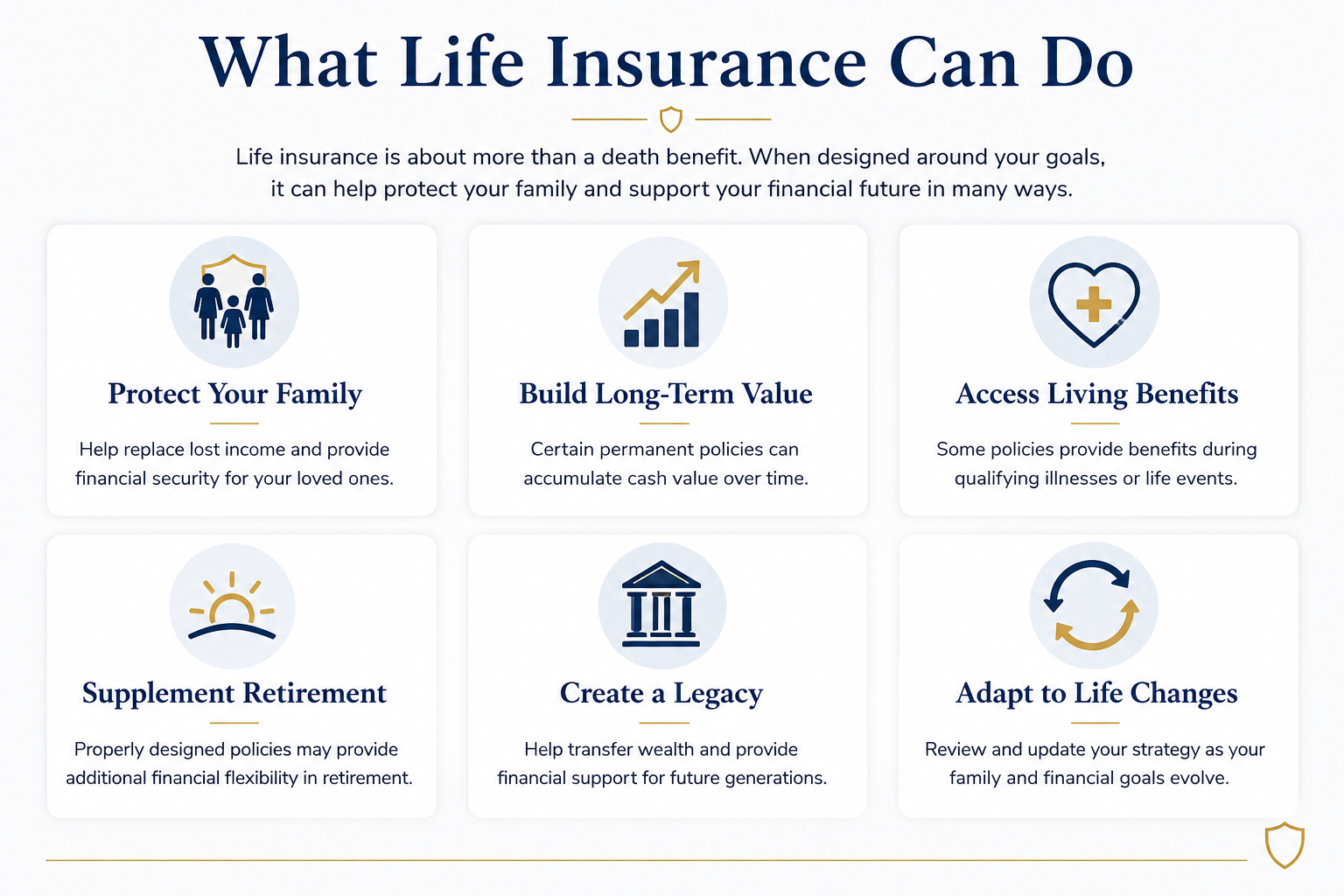
Modern life insurance can provide benefits throughout your lifetime—not just after you're gone. The illustration below highlights several of the ways life insurance may help protect your family's financial future.
Why Life Insurance Matters
Protect Your Income
For most families, the ability to earn an income is their most valuable financial asset. Life insurance helps replace that income if the unexpected occurs.
Protect the People You Love
Coverage can help pay everyday living expenses, mortgage payments, education costs, and other financial obligations so your family has time to adjust.
Create Financial Stability
Life insurance can also help preserve long-term financial goals, reduce financial stress, and provide resources when they're needed most.
Understanding the Two Main Categories
Term Life Insurance
Term life insurance provides protection for a specific period, such as 10, 20, or 30 years. It is often chosen by families who want affordable coverage during their working years while protecting income, a mortgage, or young children.
Permanent Life Insurance
Permanent life insurance provides lifelong protection as long as policy requirements are met. Depending on the policy, it may also build cash value, provide living benefits, and support retirement or legacy planning objectives.
Compare Your Options
Understanding the differences between Term Life Insurance and Permanent Life Insurance can help you identify which approach may best support your financial goals. The comparison below summarizes the primary characteristics of each.
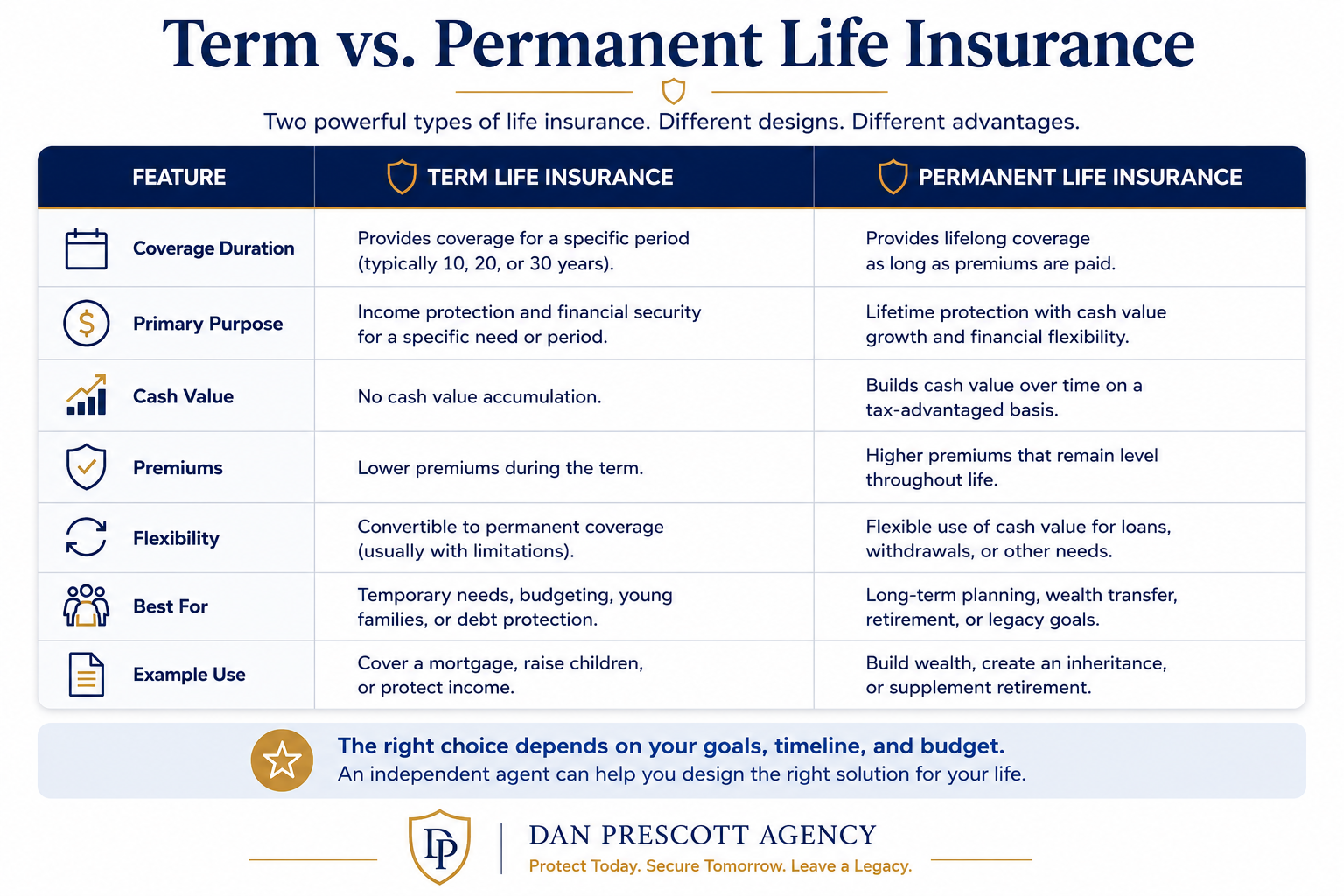
Neither option is universally better. The right solution depends on your family's needs, budget, financial goals, and long-term objectives.
Types of Permanent Life Insurance
Permanent life insurance is not a single product. Several types of permanent policies are available, each designed with different features, levels of flexibility, and long-term planning objectives. Understanding these differences can help you have a more informed conversation about which approach may best fit your goals.
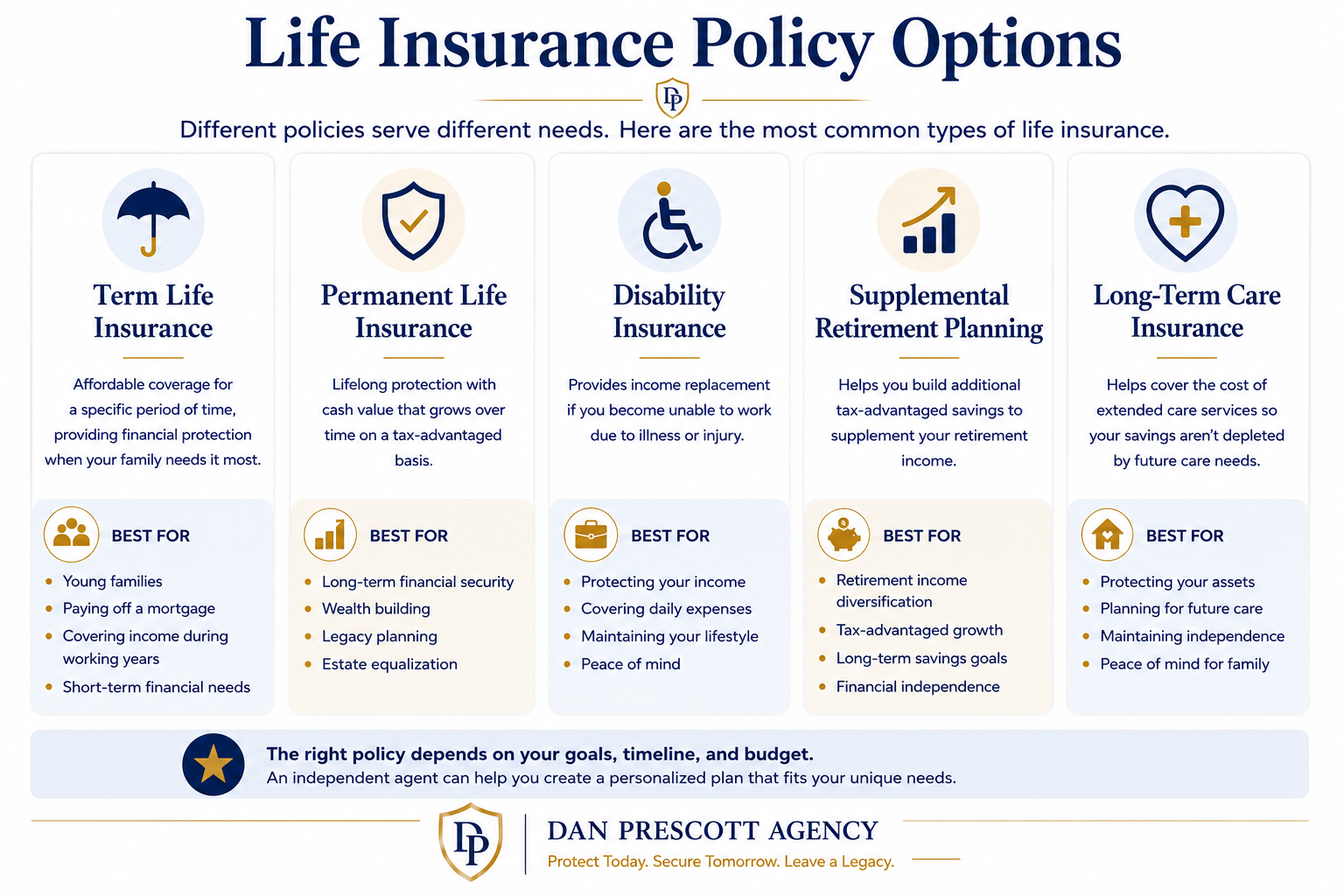
Each policy type has advantages and considerations. The best choice depends on your financial goals, risk tolerance, funding strategy, and the role life insurance will play in your overall financial plan.
Living Benefits: Protection During Your Lifetime
Many modern life insurance policies offer benefits that may be available while you're still living, depending on the policy and carrier. These features can provide financial flexibility during difficult times and are one reason life insurance has evolved beyond being solely a death benefit.
Living benefits may include:
Access to benefits for qualifying terminal illnesses
Benefits for qualifying chronic illnesses
Benefits for qualifying critical illnesses
Policy loans using available cash value (where applicable)
Retirement income flexibility for some permanent policies
How Do You Choose the Right Policy?
There is no one-size-fits-all life insurance policy. The right solution depends on your family's financial responsibilities, your long-term goals, and the resources you want to protect.
When evaluating your options, consider:
Your Human Life Value
Current household income
Family responsibilities
Existing debts
Retirement objectives
Legacy planning goals
Budget
Health and underwriting considerations
At Dan Prescott Agency, we believe education comes first. Understanding what you're protecting is the foundation for selecting appropriate coverage.
Decision Guide
If you're unsure where to begin, the educational decision tree below can help identify which Learning Center topics you may want to explore next. It is intended as a learning tool—not a personalized recommendation.
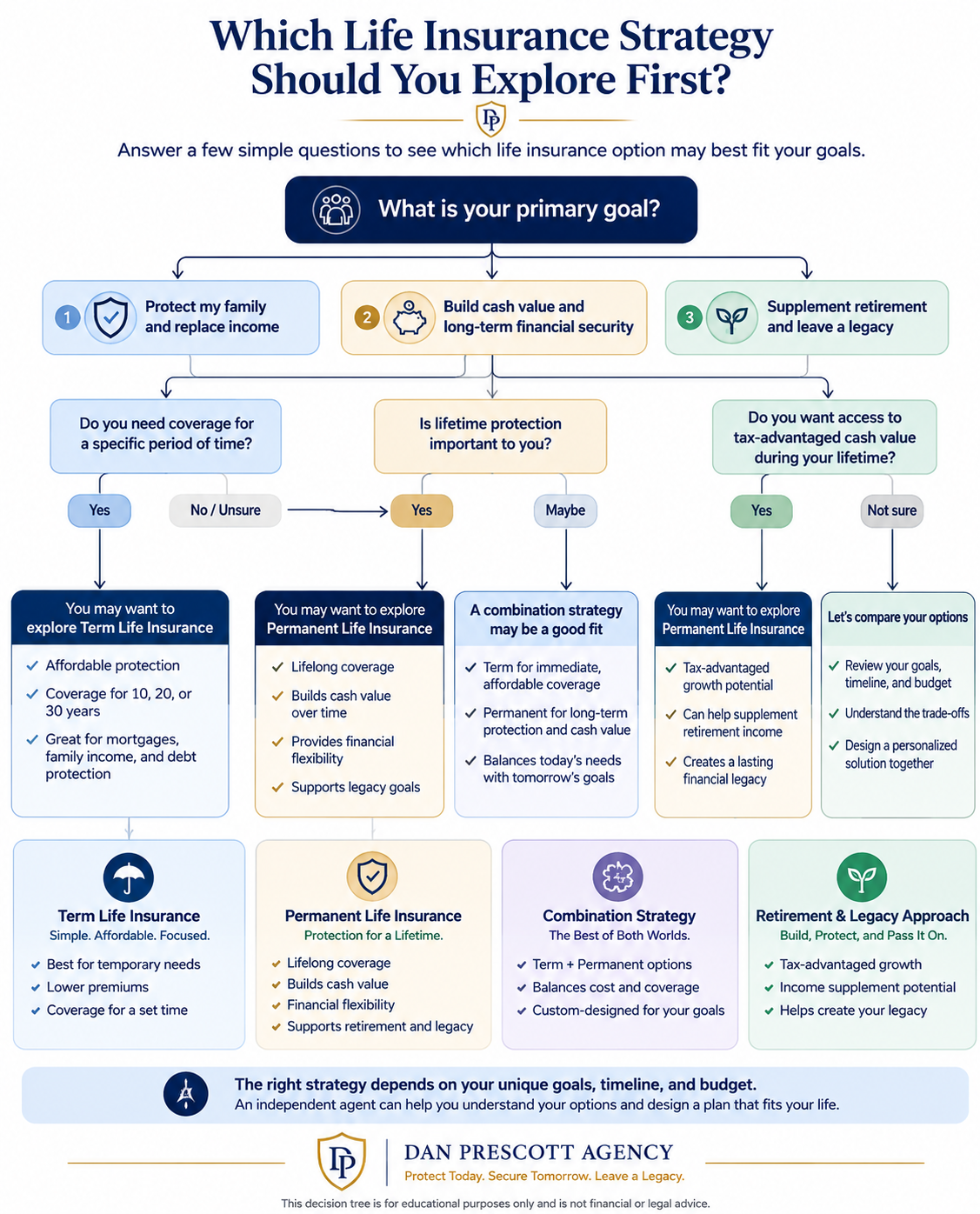
If you still have questions after reviewing the guide, we're happy to help you explore your options through a complimentary educational consultation.
Frequently Asked Questions About Life Insurance
-
The amount of life insurance you need depends on your income, debts, future financial goals, and your family's financial needs. At Dan Prescott Agency, we use a Human Life Value (HLV) analysis to help determine the appropriate amount of life insurance coverage to protect your loved ones and their future.
-
Term life insurance provides affordable coverage for a specific period, making it a popular choice for income protection and young families. Permanent life insurance provides lifelong coverage and may accumulate cash value over time, offering additional financial flexibility while helping protect your family's long-term financial future.
-
Many people are surprised to learn that life insurance is often more affordable than they expect. Your premium depends on factors such as your age, health, lifestyle, coverage amount, and the type of policy you choose. Whether you're looking for term life insurance or permanent life insurance, there are options designed to fit a wide range of budgets.
-
Yes. Many people with health conditions can still qualify for life insurance coverage. Insurance companies evaluate medical histories differently, and as an independent insurance agent, I can compare multiple carriers to help find coverage that best fits your health profile and financial goals.
-
The life insurance application process varies depending on the policy and whether a medical exam is required. Some policies can be approved within a few days, while others may take several weeks. Dan Prescott Agency will guide you through every step to make the process as simple and stress-free as possible.
-
Working with an independent insurance agent means receiving personalized guidance rather than one-size-fits-all recommendations. Unlike agents who represent a single insurance company, I compare multiple carriers, explain your options, and help you choose a life insurance solution that aligns with your family's goals, budget, and Human Life Value. My commitment to you continues long after your policy is in place.
Continue Learning
Ready to explore a topic in more detail? Continue your learning with these related articles:
Human Life Value: Your Most Valuable Asset
Understanding Term Life Insurance
Understanding Permanent Life Insurance
The Importance of Underwriting Preparation
Understanding Common Insurance Riders
What Is Your Human Life Value?
Your ability to earn an income is one of your greatest financial assets. Our Human Life Value Calculator provides a quick educational estimate of the economic value you contribute to your family and can help you better understand your life insurance needs.
Still Have Questions?
Life insurance isn't one-size-fits-all. If you'd like help understanding your options, we're here to answer your questions and explain the choices available. Our goal is to help you make an informed decision with confidence.
Educational Disclaimer
This article is provided for educational purposes only and should not be considered legal, tax, or financial advice. Insurance products, policy features, living benefits, guarantees, dividends, and underwriting requirements vary by carrier and contract. Consult a qualified insurance professional before making coverage decisions.